
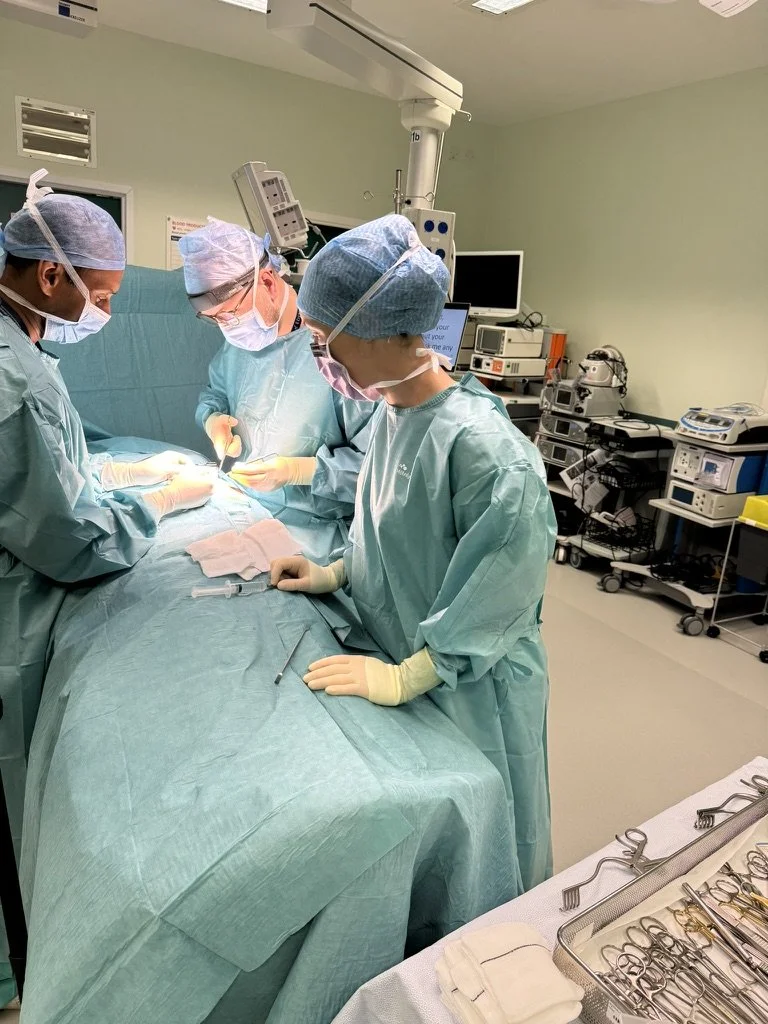
Pre and Post Operative Briefing
Educational Time-Out
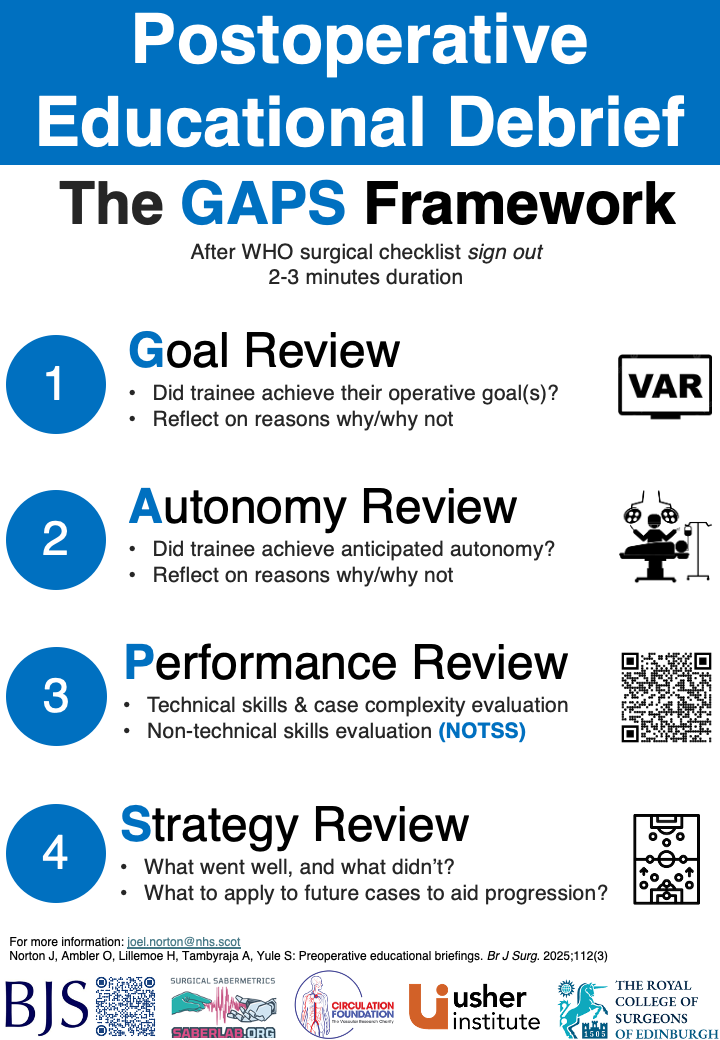
The periods immediately before and after an operation provide crucial opportunities for surgeons and trainees to plan and debrief on educational objectives, technical performance and non-technical skills. The preoperative educational briefing encompasses a two-way conversation focusing on trainee educational goal setting and operative strategy, though it is often unstructured and sometimes neglected altogether.
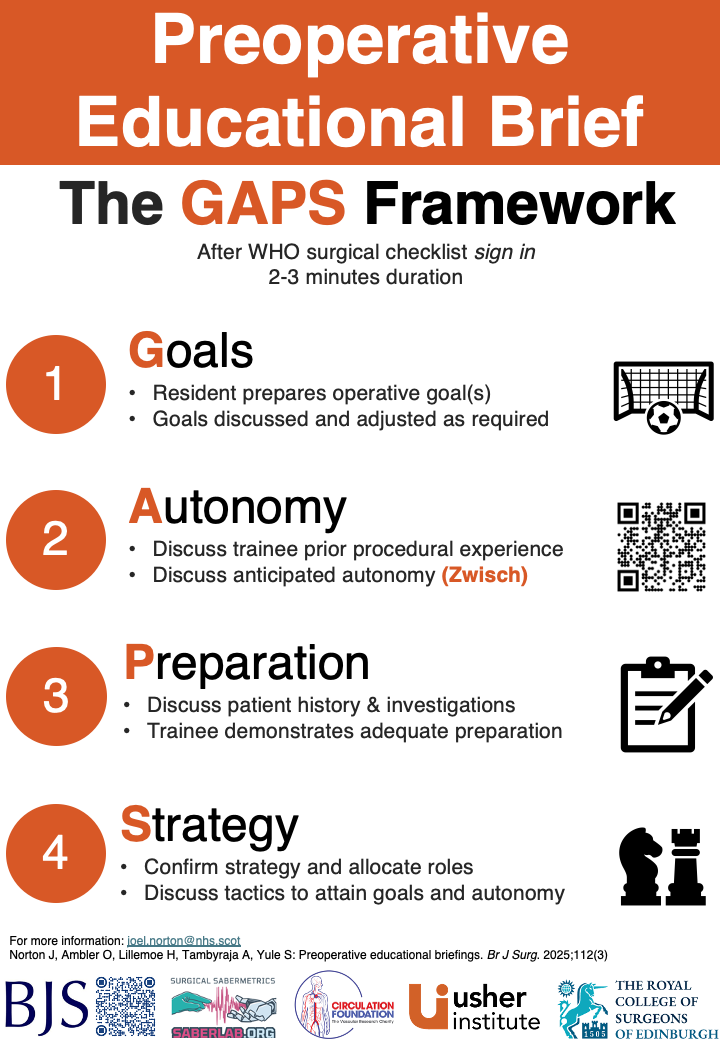
Our systematic review found that educational briefing improved a wide range of surgical education and performance outcome measures including the quality and frequency of intraoperative teaching, trainee goal setting, perioperative communication and strategy, trainer and trainee cognitive load management, and trainee procedural autonomy. Based on the collated evidence, we formulated the Goals, Autonomy, Preparation and Strategy (GAPS) framework for effective educational briefing.
The GAPS framework facilitates trust and autonomy by encouraging thorough trainee preparation, operative independence and reflective feedback. Surgeons globally can adopt the GAPS framework to set educational goals, address skill deficits, and improve autonomy and performance through a standardized and engaging approach.
How to use the GAPS Framework
1. Goal setting
The trainee attends the OR with a learning goal in mind which is adjusted as appropriate. Goal setting is an effective a tactic to attain autonomous technical skills in surgery, and improves confidence, communication and motor learning. However, it occurs a median of only 26% of the time according to surgical residents.
2. Autonomy
Trainer and trainee discuss the anticipated level of trainee autonomy, ranging from consultant demonstration to minimal supervision only. Surgical progression can be achieved through an evidence-based, 3-phase process of monitoring performance, entrustability and granting autonomy. Importantly, procedures performed independently by trainees with an unscrubbed supervisor demonstrate no increased morbidity or mortality.
3. Preparation
The trainee demonstrates adequate knowledge of patient medical records, imaging and the planned procedure. Work ethic, attention to detail and independent learning are essential elements of effective preparation, and considered key characteristics of an entrustable surgical resident. Importantly, significant disparity currently exists between residents and faculty regarding how effectively trainees prepare for operations.
4. Strategy
Trainer and trainee discuss role allocation and potential issues relevant to the procedure. Such strategizing results in progression in trainee autonomy, and fewer communication failures with the scrub team. Importantly, communication failures contribute to longer operating times and increased rates of morbidity and mortality. Effective non-technical skills, such as communication, positively impact technical performance and reduce perioperative adverse events and patient harm.